
Advanced Composition: Peer Review

Today’s Plan:

  • Peer Review

Today I’ll be asking you to read and respond to each other’s work. Peer review isn’t simply copyediting; at this point, my concern isn’t with grammatical correctness as much as with argumentative structure and supplying a reader with sufficient context to evaluate evidence.

So, for each paper, please:

1. Underline the thesis and any significant *claims*. If you were unsure what the paper’s specific purpose was, then let the author know at the end of the essay. Also, feel free to suggest how the author might make their argument more specific. Remember that every paragraph should be making one (and only one claim).

2. Look for evidence in support of claims. Do they supply evidence to support claims? Also, does the author provide information about their sources (date/time, place of publication if relevant, summary of source’s argument/goals, etc). Pay Particular Attention to what they do before and after quotes. Does the author transition into a source? Do they establish credibility for the source? Do they explain quotes? Do they do something with the quoted material, or move onto a new idea before making it clear why the quote is in the paper? Are they asking you to do their thinking for them?

3. Pay Particular Attention to Transitions Between Paragraphs. Does the author make the connection between paragraphs clear? Are their sudden jumps? Does the first sentence of paragraphs contain a “this” or “that”?

4. Highlight ideas that grab your attention and interest them. Let them know what to do more of, what ideas to expand, what they are doing well.

5. Write a Quick Summary and response at the End of the Paper.

This is the trickiest part. But after you have finished reading the paper, I want you to write a brief summary, say five sentences, that focuses on the purpose of the paper. This lets the author know what you, as a reader, got out of the paper. The nature of the response is up to you, but I would advise either asking the author a question that you have after reading the paper, or focusing on a part of the paper that either gave you pause (you weren’t sure you agree because reasons) or left you wanting more.

Don’t “kill” a paper. I’m looking for you to do two of the above on every page. Sure, you can correct grammar or formatting, but those aren’t the kinds of comments I’m looking for. I want something more constructive.

We’ll spend about 15 to 20 minutes with each paper, and then switch.
Posted in rhetoric | Tagged | Comments Off on Advanced Composition: Peer Review

Visual Rhetoric 14.1: Reviewing Infographics

Today’s Plan:

  • Remaining Schedule
  • Looking at Infographics via White Space
  • Sharing the Rubric (Google Docs)
  • Peer Reviewing Piktocharts
  • Homework

Continue reading

Posted in Uncategorized | Tagged , , , | Comments Off on Visual Rhetoric 14.1: Reviewing Infographics

Visual Rhetoric 13 (Friday): Reviewing Infographics

Today’s Plan:

  • Remaining Schedule
  • Looking at Infographics via White Space
  • Creating the Rubric (Google Docs)
  • Piktochart Graphs (Linking to a Google Sheet)
  • Break
  • Peer Reviewing Piktocharts
  • Homework

Remaining Schedule

Because April 29th is a designated reading day, we only have two class sessions left. So:

  • April 15th: Share infographics, share redesign objects, redesign presentation
  • April 22nd: Redesign presentations

As I reiterate in the homework section, this means you have to identify the document you will redesign this week. We will look at redesign targets and talk about options next week. There is a folder in canvas to share either a URL or a .jpg of your redesign target. Even if it is a print document, please take a picture or scan of it so that I can put it on the big screen (and TurboScan is a great scanner app for an iphone).

Looking at Infographics via White Space

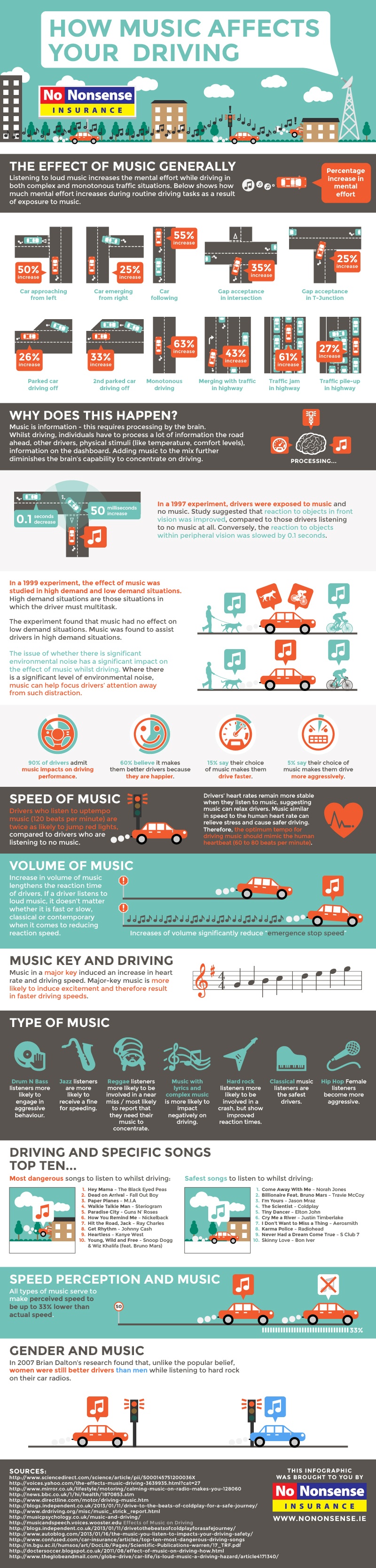
Before we create the rubric to use for peer review, I want to spend some time looking strategically at infographics. Our strategy will be informed by the WhiteSpace reading, as we pay attention to a number of core components of visual rhetoric:

  • Color
    • How many?
    • Shades?
    • Contrast?
  • Line thickness?
  • Typography
    • Font choice(s)? How many?
    • Font weight?
    • Font colors?
  • Images
    • Graphics? What kind? How many? What size?
    • Photographs? Backgrounds? How many?
  • Layout
    • Padding? Empty Space?
    • Alignment?

Now I want each of you to look at the following infographics and note what you see regarding the criteria above.

After, we will use the Google Doc I emailed out to construct a rubric for not only peer review, but also grading the final projects.

Homework

You have two obligations for next class:

  • Complete your infographic. We will look at the completed infographics in the next class. There is a major project turn in for this in Canvas.
  • Identify your redesign object. Either take a picture or scan it. Upload the image to the assignment portal in Canvas (under White Space Class Work). We will discuss these in the next class.
Posted in teaching, technology, Uncategorized | Tagged , , | Comments Off on Visual Rhetoric 13 (Friday): Reviewing Infographics

Advanced Composition 13.1: MLA / APA Formatting

Today’s Plan:

  • Review Timeline
  • Guts of an Introduction
  • MLA and APA Workshop

Continue reading

Posted in teaching, writing | Tagged , , | Comments Off on Advanced Composition 13.1: MLA / APA Formatting

Visual Rhetoric 13.1: Making Charts and Graphs

Today’s Plan:

  • Calendar
  • Review Readings
  • Basic Elements of Visual Rhetoric
  • Playing with .csv files and Piktochart

Continue reading

Posted in teaching, technology, Uncategorized | Tagged , , | Comments Off on Visual Rhetoric 13.1: Making Charts and Graphs

Visual Rhetoric 12 (Friday): Piktochart

Today’s Plan:

  • Make-up Presentations
  • Review Assignments 3 and 4
  • Make Piktochart.com accounts
  • Follow the Intro .pdf
  • Homework

Continue reading

Posted in teaching, technology | Tagged , , | Comments Off on Visual Rhetoric 12 (Friday): Piktochart

Advanced Comp 12.2: Using Quotations

Today’s plan:

  • Review Timeline and Expectations
  • Using Quotations
  • Homework

Continue reading

Posted in teaching, writing | Tagged , | Comments Off on Advanced Comp 12.2: Using Quotations

Advanced Composition 12.1: Summarizing Research

Today’s Plan:

  • A few heuristics
  • Summarize an article
  • Homework

Continue reading

Posted in research, rhetoric, teaching, writing | Tagged | Comments Off on Advanced Composition 12.1: Summarizing Research

Visual Rhetoric 12.1: Using Piktochart

Today’s Plan:

  • Make Piktochart.com accounts
  • Follow the Intro .pdf
  • Homework

Continue reading

Posted in teaching, technology | Tagged , , , | Comments Off on Visual Rhetoric 12.1: Using Piktochart

Visual Rhetoric 11 (Friday): Infographic Project and Book Production Presentations

Today’s Plan:

  • Introduce Infographic Project
  • Introduce (Briefly) the Final Project
  • Book Production Presentations
  • Homework

Infographic Project

For our third project, we will be creating infographics. I want to share two short articles, “What is an Infographic?” and “11 Best Infographic Designs of 2015.” Tips to go Viral.

My original plan was to ask you to create an infographic that visualizes some kind of argument using data from the us.gov database. The database has statistics on a wide range of topics, and is pretty easy to navigate. These infographics would suit technical communicators, since you would be taking rather opaque data and visualizing in such a way as to make an argument.

However, after those readings, I am a bit more interested in seeing what else you might want to visualize. I want to leave room for you to be creative. So, with that in mind, the third assignment looks something like this:

I would like you to make an infographic that visualizes a problem. The infographic should make some kind of argument as to how we should address or solve the problem. In a few cases, people might elect to make a series of shorter infographics rather than one extra-long one (if you want to make a series of infographics that address a problem). The infographic might show us how to do something, tell us about a problem we don’t know about, visualize something complicated, or something else.

The infographic needs to include at least one chart (pie, bar, line, other) that you make in another program.

The infographic should be longer than a standard printable paper. We are designing these for the web, with hopes of viral circulation on social media.

Your infographic should include some kind of research; that is, it must visualize research. It should include sources to increase credibility. Note: there are a few creative projects that might not require research, but you must run your idea by me before I grant this exemption.

The design of your infographic should reflect the principles we have been working on all semester–addressing layout, color, contrast, typography, etc.

These infographics will be due in class on April 15th. We will view them in class. This is right around the corner–but I am pushing us through this assignment quickly so that you have time to complete the final assignment before finals week.

My initial plan was to create these infographics in InDesign, but I have decided to try out a new (and much more user friendly tool), so we will be using Piktochart.com, a freemium tool that gives us access to templates and graphing tools. NOTE: I am using a WYSIWYG, user-friendly tool because I expect these infographics to be content-rich (in other words, I want substance). Also, using a WYSIWYG tool allows us to produce this a bit quicker.

We will do this introduction to Pikochart in next Friday’s class.

Final Project

For the final project, I am going to ask you to redesign a document or visual that exists in the real world. Over the next few weeks, I want you to try and find a document or visual that needs to be redesigned. This could be a flyer, a menu, a sign, a handout, or just about anything else.

Homework

For homework, read The Best 100 Infographics for more inspiration. As with our other projects, we have to do some genre research before we begin inventing and designing.

For homework, I want you to identify the topic that you would like to visualize and begin collecting some data to transform into a chart or graph.

Posted in Uncategorized | Comments Off on Visual Rhetoric 11 (Friday): Infographic Project and Book Production Presentations